Seychelles Travel Tips · Mahé
Ros Sodyer
A dramatic natural rock pool near Anse TakamakaUn bassin naturel spectaculaire près d’Anse Takamaka
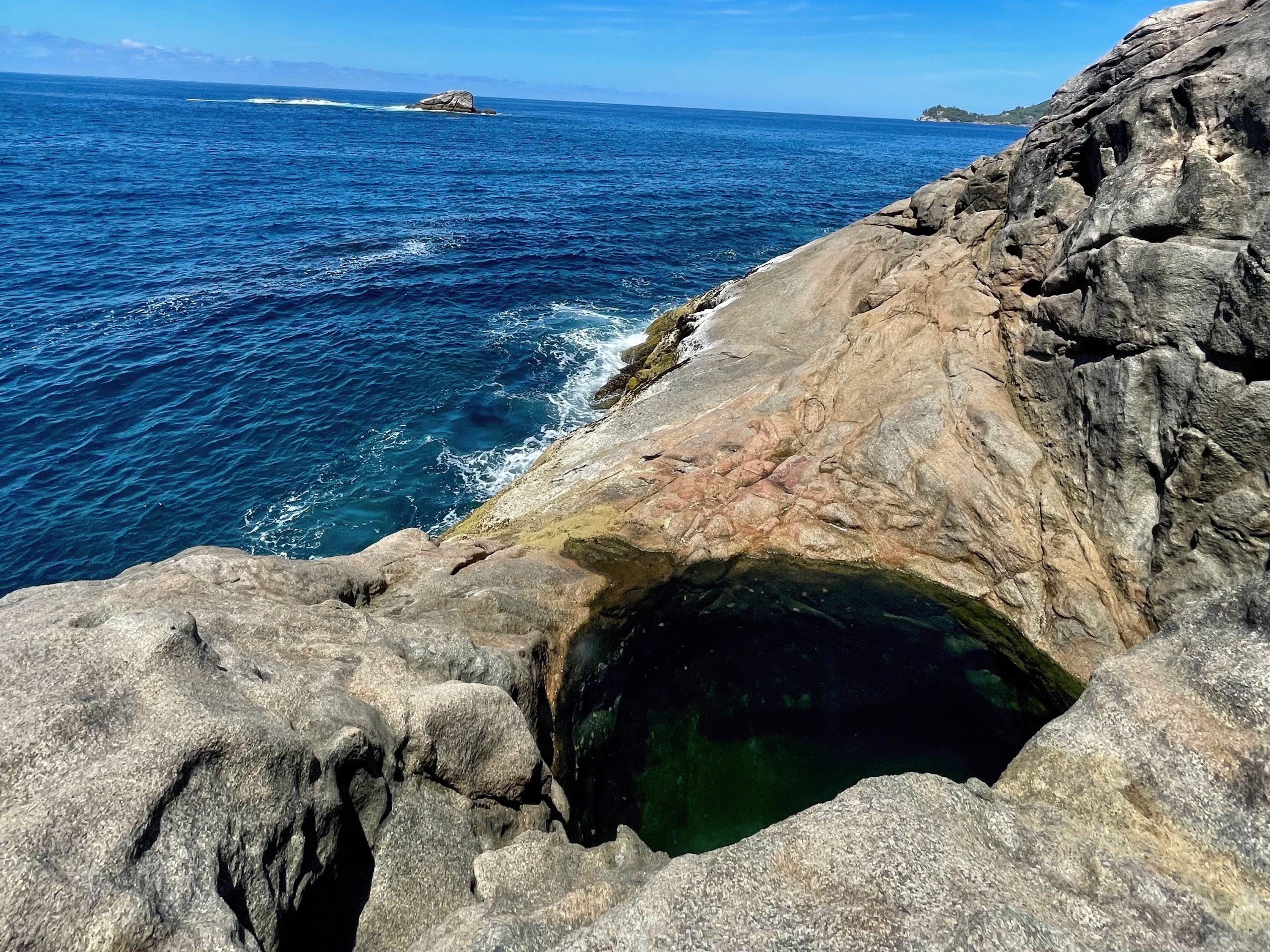
🇬🇧 Ros Sodyer is a natural pool carved into granite beside the open sea on southern Mahé. It is a striking place to observe, but not a beach or a safe swimming pool. Conditions can change quickly; plan the walk for the scenery and take the official safety advice seriously.
🇫🇷 Ros Sodyer est un bassin naturel creusé dans le granit au bord de l’océan, dans le sud de Mahé. C’est un lieu spectaculaire à observer, mais ni une plage ni un bassin de baignade sûr. Les conditions peuvent changer rapidement : venez pour le paysage et prenez les consignes officielles de sécurité au sérieux.
QUICK FACTS · En un coup d’œil
Before You GoAvant de partir
🇬🇧 What to expect
Ros Sodyer is a coastal outing with uneven, exposed granite rather than an easy day at the beach. The view of the basin and the ocean is the attraction. Go only when weather and sea conditions are suitable for the approach, and leave enough daylight to return.
The route may be difficult to follow or slippery. It may not suit young children or visitors who cannot move confidently over uneven rock. Ask locally about the current path; a knowledgeable guide can help with route finding.
🇫🇷 À quoi s’attendre
Ros Sodyer est une sortie côtière sur un granit irrégulier et exposé, pas une journée de plage facile. L’intérêt principal est la vue sur le bassin et l’océan. Partez seulement si la météo et la mer permettent l’approche, et gardez assez de lumière pour le retour.
Le chemin peut être difficile à suivre ou glissant. Il peut ne pas convenir aux jeunes enfants ni aux personnes peu à l’aise sur les rochers. Renseignez-vous sur l’itinéraire actuel ; un guide qui connaît le secteur peut aider à s’orienter.
Discover the Rock PoolDécouvrir le bassin rocheux
🇬🇧 Granite and open sea
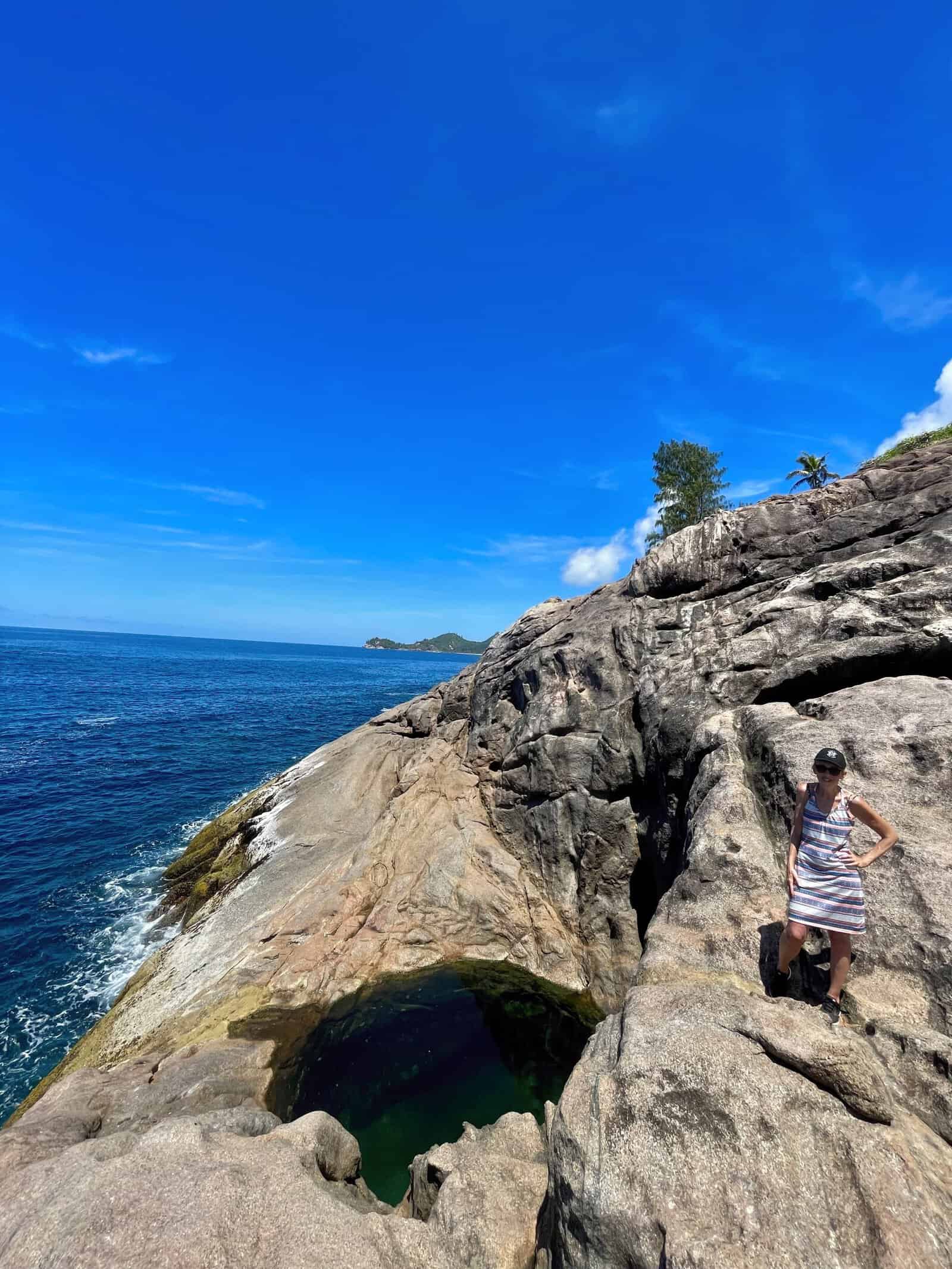
The pool is a depression in coastal granite directly beside the ocean. Its appearance changes with the light, water level and swell. The view is photogenic precisely because the setting is wild and exposed.
Enjoy the formation from stable ground. A still photograph does not show incoming waves or the condition of the rock underfoot.
🇫🇷 Granit et océan
Le bassin est une cuvette dans le granit côtier, immédiatement voisine de l’océan. Son aspect varie selon la lumière, le niveau d’eau et la houle. Le site est photogénique parce qu’il est sauvage et exposé.
Admirez la formation depuis un endroit stable. Une photo calme ne montre ni les vagues qui arrivent ni l’état des rochers sous les pieds.
Access from Anse TakamakaAccès depuis Anse Takamaka
🇬🇧 Plan the approach
- Start by locating the Anse Takamaka area on southern Mahé, then confirm the current trail locally before setting off.
- Expect a walk over uneven ground and granite; do not assume the route is signposted throughout.
- Turn back if the path is unclear, wet or exposed to waves. Do not cross private property or barriers without permission.
🇫🇷 Préparer le trajet
- Repérez d’abord le secteur d’Anse Takamaka au sud de Mahé, puis confirmez l’itinéraire actuel sur place avant de partir.
- Prévoyez une marche sur un sol irrégulier et du granit ; ne supposez pas que tout le parcours est balisé.
- Faites demi-tour si le chemin est incertain, humide ou exposé aux vagues. Ne franchissez pas une propriété privée ou une barrière sans autorisation.
🇫🇷 Nous n’indiquons ni durée de marche précise ni itinéraire garanti : l’état du sentier et l’accès peuvent changer. Vérifiez sur place auprès d’une personne connaissant le secteur.
Sea and Rock SafetySécurité près de la mer et des rochers
🇬🇧 Keep away from the water
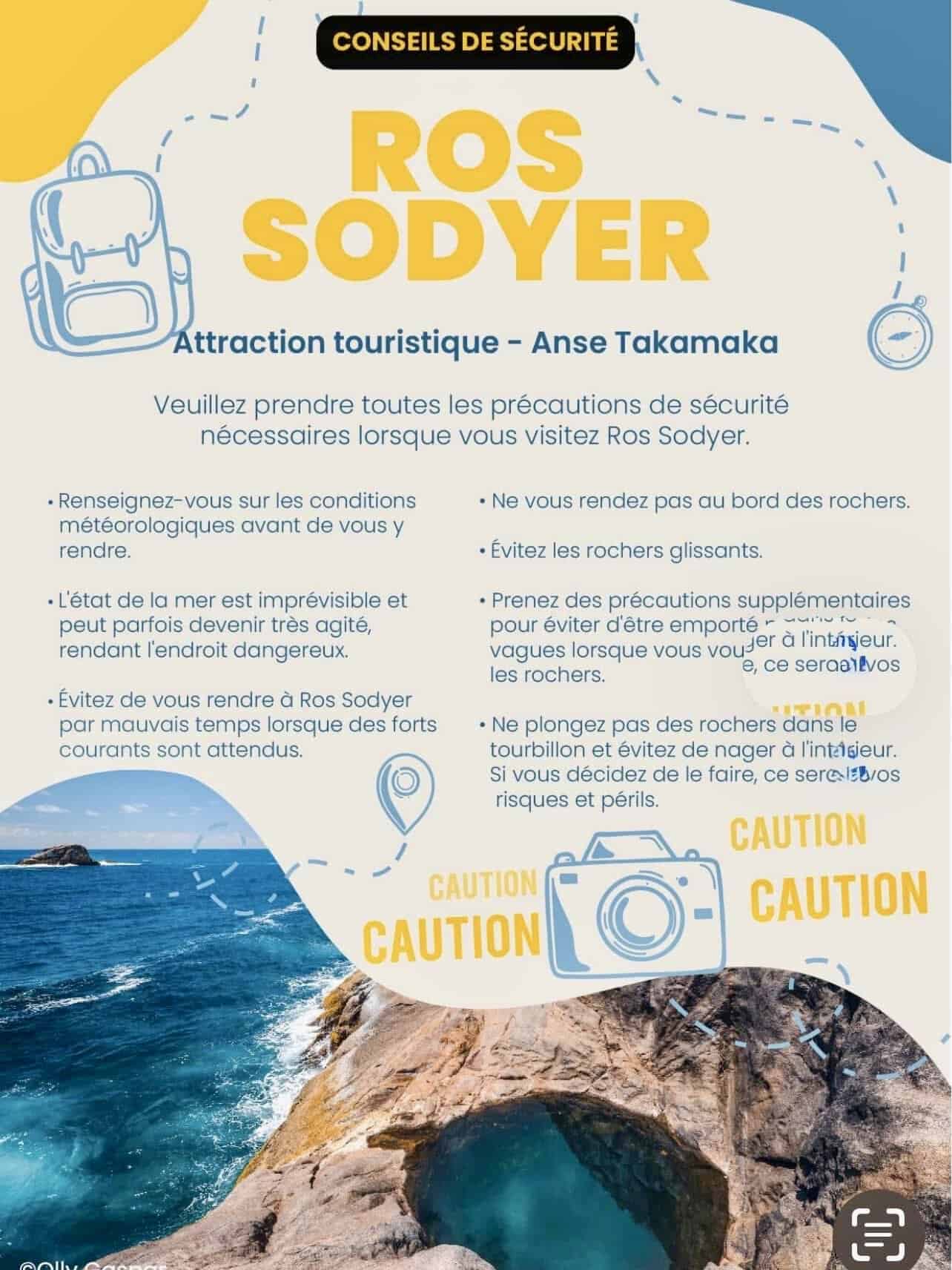
The Seychelles Tourism Department warns that sea conditions at Ros Sodyer can be unpredictable. Waves and strong currents can make the site dangerous, and the rocks may be slippery. Keep back from the edge, especially when waves reach the granite.
Do not jump, dive or swim in the rock pool. Do not treat a low tide or calm-looking photograph as permission to enter. Follow current signs and instructions on site.
🇫🇷 Restez à distance de l’eau
Le Tourism Department des Seychelles avertit que l’état de la mer à Ros Sodyer peut être imprévisible. Les vagues et les courants peuvent rendre le site dangereux, et les rochers peuvent être glissants. Restez loin du bord, surtout si les vagues atteignent le granit.
Ne sautez pas, ne plongez pas et ne nagez pas dans le bassin. Une marée basse ou une photo calme ne constituent pas une autorisation d’y entrer. Respectez les panneaux et consignes en vigueur sur place.
🇫🇷 L’avis officiel recommande de vérifier la météo, d’éviter les mauvaises conditions et les forts courants, de ne pas s’approcher du bord et d’éviter de nager ou de plonger dans le bassin. Voir les consignes du Tourism Department.
What to BringQue prévoir
🇬🇧 Useful essentials
- Closed shoes with reliable grip for uneven rock.
- Drinking water, sun protection and a charged phone.
- Enough time and daylight to return without rushing.
Keep both hands free on difficult sections and do not carry gear that makes your footing less secure.
🇫🇷 L’essentiel
- Des chaussures fermées avec une bonne adhérence sur les rochers.
- De l’eau potable, une protection solaire et un téléphone chargé.
- Assez de temps et de lumière pour rentrer sans se presser.
Gardez les mains libres dans les passages difficiles et évitez tout équipement qui gêne l’équilibre.
Photos and Safety NoticePhotos et consignes de sécurité
🇬🇧 The rock pool photograph and the French safety notice are shown in full so their details remain visible. Open either image for the original size.
🇫🇷 La photo du bassin et l’affiche de sécurité en français sont montrées sans recadrage. Ouvrez une image pour la voir en taille originale.
LocationLocalisation
🇬🇧 Ros Sodyer is in the Anse Takamaka area of southern Mahé. The map link identifies the general attraction, not a verified safe trailhead. Confirm the approach locally before walking.
🇫🇷 Ros Sodyer se trouve dans le secteur d’Anse Takamaka, au sud de Mahé. Le lien cartographique situe l’attraction de façon générale, pas un départ de sentier sûr et vérifié. Confirmez l’accès sur place avant de marcher.
Your Questions AnsweredVos questions sur Ros Sodyer
Is Ros Sodyer a beach?
Ros Sodyer est-il une plage?
No. Ros Sodyer is a natural rock pool on the granite coast near Anse Takamaka. This guide appears in the Mahé beaches section to help visitors find it, but it is not a sandy beach.
Non. Ros Sodyer est un bassin naturel dans le granit près d’Anse Takamaka. Ce guide figure dans la rubrique des plages de Mahé pour être facile à trouver, mais ce n’est pas une plage de sable.
Can you swim or dive in the rock pool?
Peut-on nager ou plonger dans le bassin?
Do not treat it as a swimming spot. The Seychelles Tourism Department warns of unpredictable sea conditions, waves, slippery rock and the danger of swimming or diving in the pool. Observe it from a safe distance and follow current local instructions.
Ne considérez pas le bassin comme un lieu de baignade. Le Tourism Department des Seychelles avertit que la mer peut changer brusquement et signale les vagues, les rochers glissants et le danger de nager ou de plonger dans le bassin. Observez-le à distance et suivez les consignes locales en vigueur.
How do you reach Ros Sodyer?
Comment rejoindre Ros Sodyer?
Visitors commonly approach from the Anse Takamaka area on southern Mahé and continue on foot over uneven ground and granite. Trail details and conditions may change. Ask locally about the current route and consider a knowledgeable local guide if you are unsure.
Les visiteurs partent généralement du secteur d’Anse Takamaka, au sud de Mahé, puis marchent sur un terrain irrégulier et du granit. Le tracé et son état peuvent changer. Renseignez-vous sur place et envisagez un guide local connaissant le parcours si vous avez un doute.
When should you avoid the visit?
Quand faut-il renoncer à la visite?
Avoid Ros Sodyer in bad weather, rough seas, strong swell or when rocks are wet and slippery. Conditions at the coast can change quickly. If the approach or the sea looks unsafe, turn back.
Renoncez par mauvais temps, mer agitée, forte houle ou lorsque les rochers sont mouillés et glissants. Les conditions côtières changent vite. Si l’approche ou la mer paraît dangereuse, faites demi-tour.